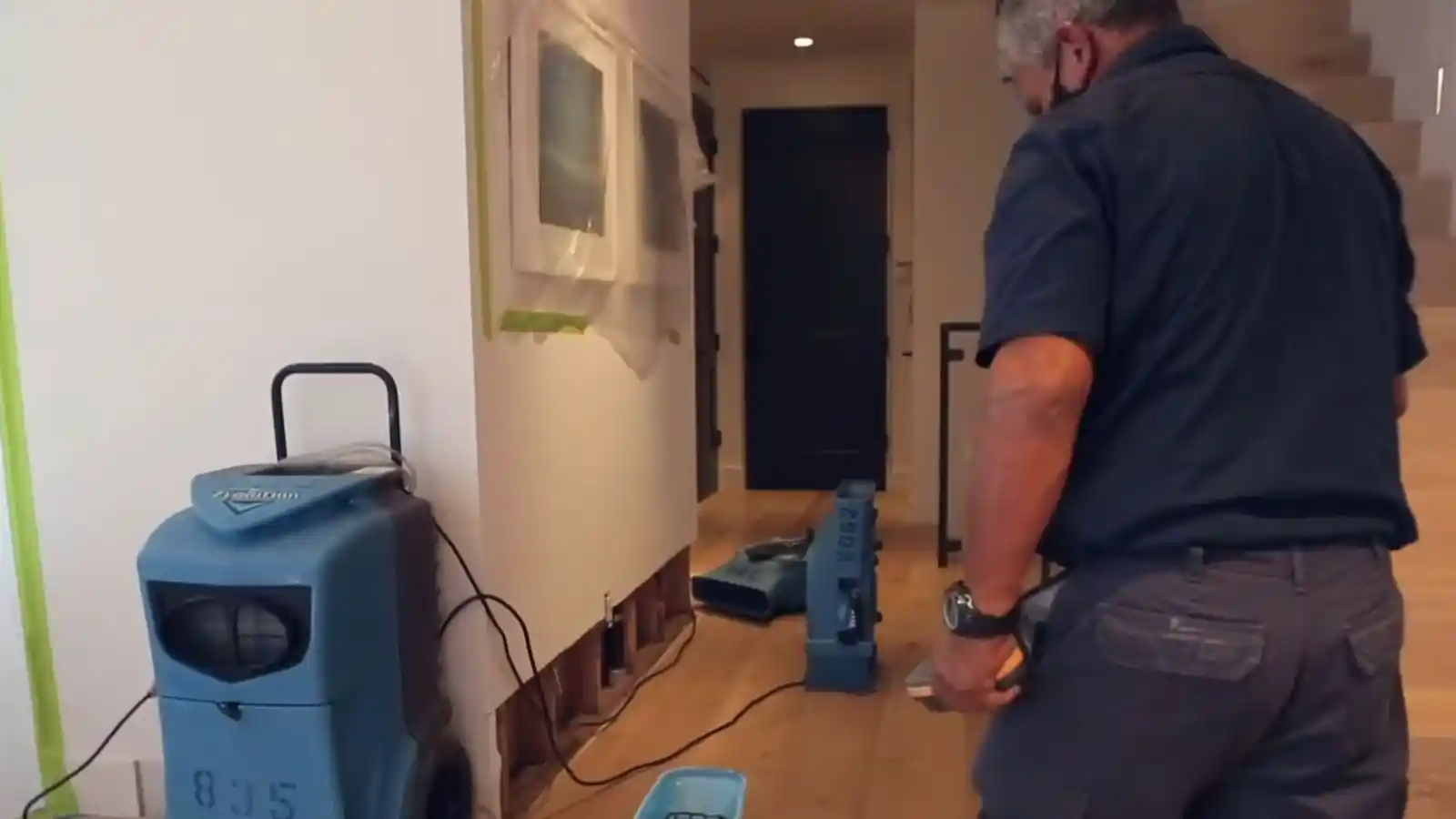
Serving Tarpon Springs and surrounding Pinellas County, 24/7 dispatch with a documented, written assessment before any work begins.
Sewage cleanup covers a broader range of contaminated-water scenarios than a single backup. Storm surge that's mixed with runoff from streets and storm drains, for instance, is treated with the same contaminated-water protocol as sewage, because the health risk and the required cleanup steps are similar. Hurricane Helene's 2024 surge into the historic district is a real example of this kind of mixed-contamination event.
For commercial properties, sewage or contaminated-water events also carry occupancy and health-code implications that residential jobs don't, which is why we scope commercial contaminated-water cleanup with additional documentation for the property owner or manager.
We document contamination extent with photos and, where relevant, moisture and contamination readings, which supports both the insurance claim and any conversation with the health department or city that a larger contamination event might require.
Contaminated-water claims typically require more detailed documentation than clean-water claims, including what was removed versus dried and why, since porous-material disposal is one of the larger cost line items. We keep an itemized record of removed materials to support the claim.
Businesses along Dodecanese Boulevard occasionally deal with contaminated water from shared or aging commercial plumbing serving multiple storefronts, which adds a coordination step with neighboring tenants or the property owner that a single-family home job doesn't usually require.
For any contaminated-water job, we explain up front which materials are being removed and why, rather than presenting a final list after the fact — porous-material disposal is usually the single largest cost driver in this type of cleanup, so that conversation happens early.
We separate cross-contamination risk zones during a contaminated-water job, using physical barriers where needed so unaffected areas of a home or business aren't put at risk simply by proximity to the cleanup work in progress.
We also see a seasonal pattern here tied to Florida's heavy summer rain. Municipal sewer systems across this part of Pinellas County can become overwhelmed during sustained heavy rainfall, leading to backups that have nothing to do with anything happening inside the affected property itself. If several neighbors report similar issues around the same time, that's a strong signal the cause is upstream in the municipal system rather than isolated to one home or business.
A common misconception is that any standing water that looks relatively clear is safe to handle without special precautions. Sewage and contaminated water can look deceptively clear even while carrying significant bacterial contamination, which is why we assess the water's likely source and history rather than relying on visual clarity to determine whether contaminated-water protocols apply.
We also recommend keeping a record of any cleanup work performed, including dates and photos, since this documentation can be useful if a similar issue arises again and helps establish whether a pattern is developing at the property.
Call now. This needs professional sanitizing, not just drying.
Water with visible debris, discoloration, or strong odor.
An odor distinct from ordinary flood or leak water.
Carpet, drywall, or insulation exposed to contaminated water.
Contamination spread across more than one room.
Describe the contamination source and affected area.
Area sealed off to prevent contamination spread.
Contaminated water extracted, unsalvageable materials removed.
Full disinfecting followed by structural drying.
 Cost Ranges
Standard residential contaminated-water event.
Includes additional documentation for occupancy and code purposes.
Cost scales with square footage affected and how many materials require removal rather than drying.
Related ServicesFor contamination specifically from a drain or plumbing backup.
Broader commercial water damage response.
For cleanup purposes, yes — both are classified as contaminated water and require sanitizing beyond standard extraction.
Commercial contaminated-water jobs typically need more thorough documentation to support both insurance claims and any occupancy or health-code requirements.
Yes, we document contamination extent thoroughly, which can support conversations with the health department or city if a larger event requires it.
Yes, we keep an itemized record of removed materials, since disposal is often one of the larger line items on a contaminated-water claim.
When contamination involves shared or aging commercial plumbing, yes. We coordinate with the property owner or neighboring tenants as needed.
Yes, we explain which materials are being removed and why before that work happens, since disposal is often the largest cost factor.
Yes, we use physical barriers to separate cross-contamination risk zones from unaffected parts of the property.
Call now. This needs professional sanitizing, not just drying.
☎ Call (727) 591-9483