Serving Tarpon Springs and surrounding Pinellas County, 24/7 dispatch with a documented, written assessment before any work begins.
Tarpon Springs has real, recent storm history to draw on: Hurricane Helene struck in September 2024, and Hurricane Milton followed just two weeks later, with the Southwest Florida Water Management District actively drawing down Lake Tarpon ahead of Milton to prevent catastrophic surge and outfall-canal flooding around the lakefront neighborhoods. Both storms caused real, documented property damage across the city, including floodwater reaching Main Street in the historic district.
The city's response has stayed active well past the storms themselves — a no-cost storm-related building permit program ran through May 13, 2025, and the substantial-damage compliance deadline for affected properties has since been extended to June 1, 2026, meaning storm recovery is still an open, current process for a meaningful number of homeowners.
Tarpon Springs is also a named participant in Elevate Florida, the state's $400 million-plus home-hardening and mitigation program, and the city carries deeper storm history still: the 1921 Tarpon Springs Hurricane, a Category 3 storm with an 11-foot surge, remains the historical benchmark event referenced in coverage of storms like Milton.
We also flag anything relevant to future mitigation while we're on site — a roof vulnerability, a drainage issue near the foundation, or a window seal that let wind-driven rain through — since that kind of detail is useful whether you pursue Elevate Florida funding or simply want it addressed before the next storm season.
Storm damage documentation serves two separate purposes in Tarpon Springs right now. Supporting an insurance claim and supporting the city's substantial-damage compliance process through the June 2026 deadline. We structure our reporting so the same documentation can be used for both where applicable, rather than creating two separate records.
Waterfront homes along Spring Bayou and the Anclote River took the most direct storm-surge exposure during both Helene and Milton, while inland properties nearer US 19 more often saw wind and rain intrusion rather than surge. We scope the assessment differently depending on which pattern applies to your property.
Given how much documentation matters for storm-related work right now, we make a point of reviewing what we've recorded with the property owner before we leave — insurance photos, moisture readings, and anything relevant to city compliance, so nothing is left unclear about what was captured.
Board-up materials are sized to the specific opening rather than generic sheets, since a poorly fitted board can let wind-driven rain continue entering even after it's technically covered, a detail that matters more during an active storm than it might seem.
We also track how storm damage assessment needs differ by property type. A single-family home typically needs one consolidated inspection, while a multi-unit building or a commercial property along a corridor like Dodecanese Boulevard may need separate assessments per unit even when the storm event was the same, particularly if different units sustained different types or severity of damage. We scope multi-unit storm response accordingly rather than treating it as one undifferentiated job.
Call now for documented storm damage response.
Floodwater that entered from tidal surge rather than rainfall.
Water forced through siding, windows, or roofing by high wind.
Missing shingles, exposed decking, or visible structural stress.
Impact damage from trees or debris during the storm.
Describe the storm damage as soon as it's safe to do so.
Board-up or tarping to prevent further exposure.
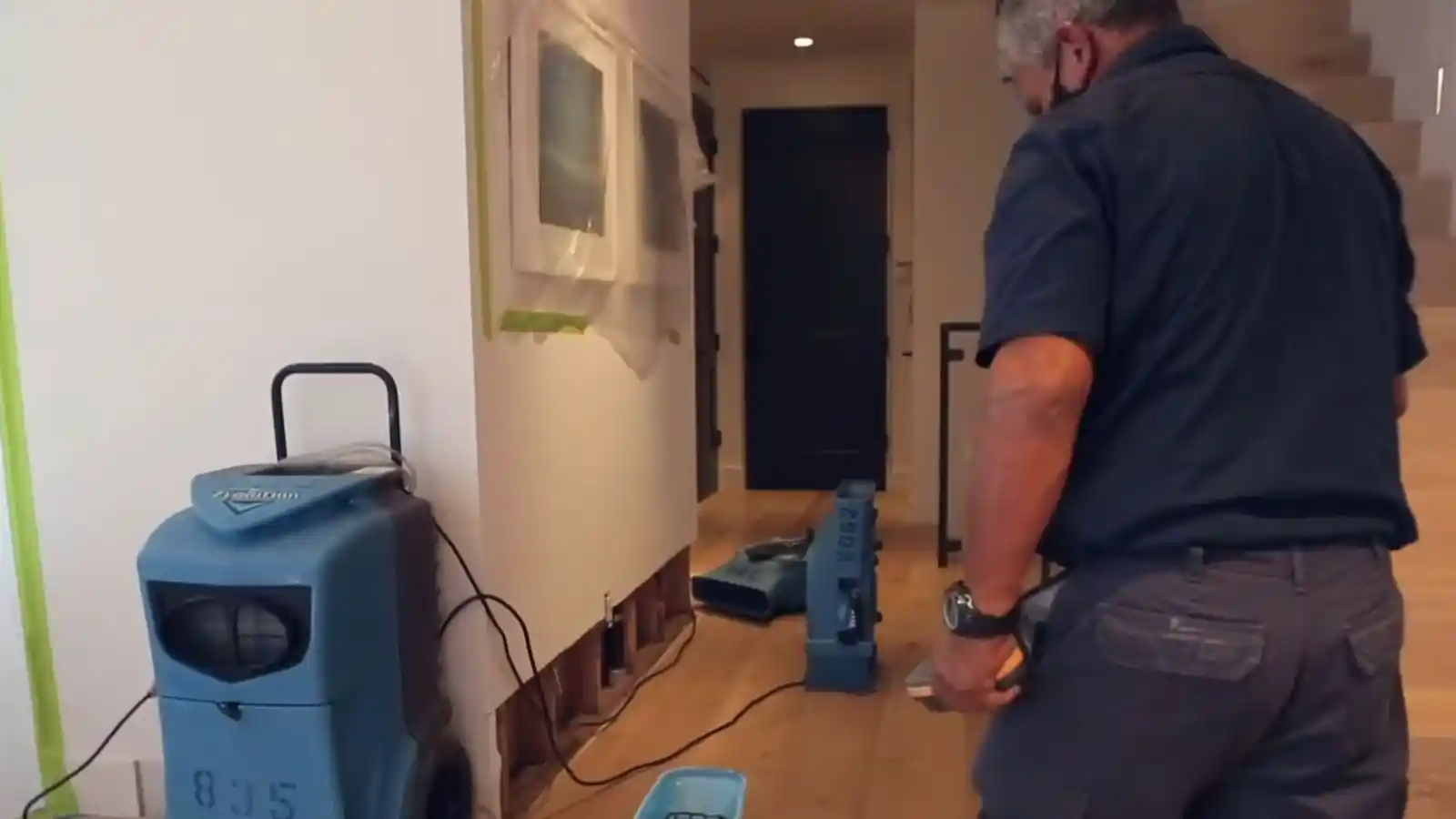
Water extraction and structural drying begins.
Damage documented for compliance and insurance, then repaired.
 Cost Ranges
Localized water intrusion from storm conditions.
Broader surge damage or structural involvement.
Documentation for city compliance and insurance is included as part of every storm damage job.
Related ServicesFor contaminated storm-surge water cleanup specifically.
Fast extraction for wind-driven rain or surge water.
Yes. Tarpon Springs extended the deadline for storm-affected properties to June 1, 2026. We document damage in a way that supports that compliance process with the city.
We can provide documentation of storm damage that may support a mitigation program application, though the application itself is handled through the state program directly.
We'll flag anything we notice during the assessment. Roofing, drainage, or window-seal issues. That's worth addressing before the next storm, whether through Elevate Florida or a private contractor.
In most cases yes — we structure our storm damage reporting so it can support both an insurance claim and the city's substantial-damage compliance process.
Yes, waterfront properties are assessed primarily for surge exposure, while inland properties are assessed more for wind and rain intrusion.
Yes, we go over what was recorded. Photos, moisture readings, and compliance-relevant details. Before we finish the visit.
Yes, a poorly fitted board can still let wind-driven rain in, so we size materials to the actual opening.