Serving Tarpon Springs and surrounding Pinellas County, 24/7 dispatch with a documented, written assessment before any work begins.
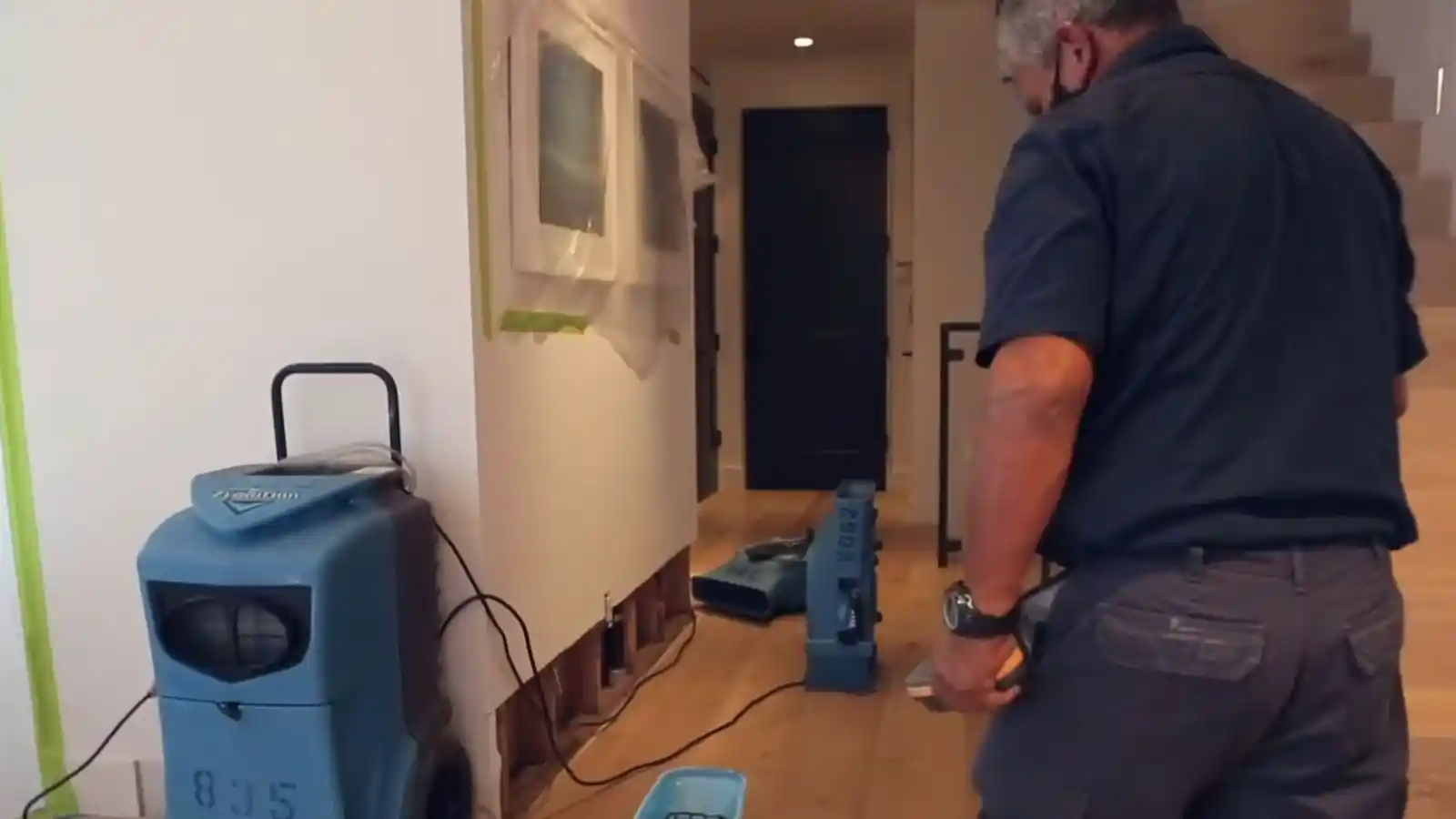
Extraction only removes the water you can see. Structural drying is what addresses the moisture that's worked its way into framing, subfloor, and wall cavities, which is invisible without a moisture meter but is exactly where mold gets its start.
In a climate that already sits at close to 50 inches of annual rainfall and stays humid most of the year, ambient conditions work against natural drying, which is why industrial dehumidification is usually necessary rather than optional.
Older homes in the historic district and along Spring Bayou, many built before modern flood-elevation and ventilation standards, tend to hold moisture in wall cavities longer than newer construction near US 19. We adjust drying time and equipment placement based on the building's age and construction, not a fixed schedule.
We also account for finish materials during drying — hardwood flooring, for example, needs a slower, more controlled drying process than tile or vinyl to avoid permanent cupping, so equipment placement and airflow are adjusted by material, not just by square footage.
Drying jobs that run several days need daily moisture logs to support a claim, since some carriers push back on extended drying timelines without evidence the structure genuinely needed that long. We track and provide those daily readings as standard practice, not as an add-on, for any job running more than a single day.
Commercial spaces along the Sponge Docks tourist corridor sometimes combine ground-floor retail with older masonry construction, which holds moisture differently than a typical residential wall assembly — we adjust drying equipment and duration for that construction type specifically rather than using a standard residential timeline.
We check in with a straightforward daily update while equipment is running, rather than leaving a dehumidifier running unattended for days at a time — most customers want to know drying is actually on track, not just assume it from the presence of equipment.
We track relative humidity in the room alongside material moisture content, since drying equipment is only effective if ambient humidity in the space is actually being reduced — running dehumidifiers in a room with doors and windows open defeats the purpose, so we check for that during setup.
We also track how different rooms in the same property can dry at very different rates depending on their exposure to sunlight and airflow.
An interior bathroom with no windows often takes longer to dry than a sunlit living room even with identical equipment running, simply because natural airflow and light both help the drying process along. We adjust equipment placement room by room rather than assuming a uniform drying rate across the whole affected area.
Call for moisture assessment and dehumidification.
Framing or subfloor testing above normal moisture levels.
Wood flooring or trim visibly deforming from moisture.
A room that feels damp days after visible water is gone.
Odor concentrated near a specific wall or floor section.
Moisture mapping of affected framing, subfloor, and walls.
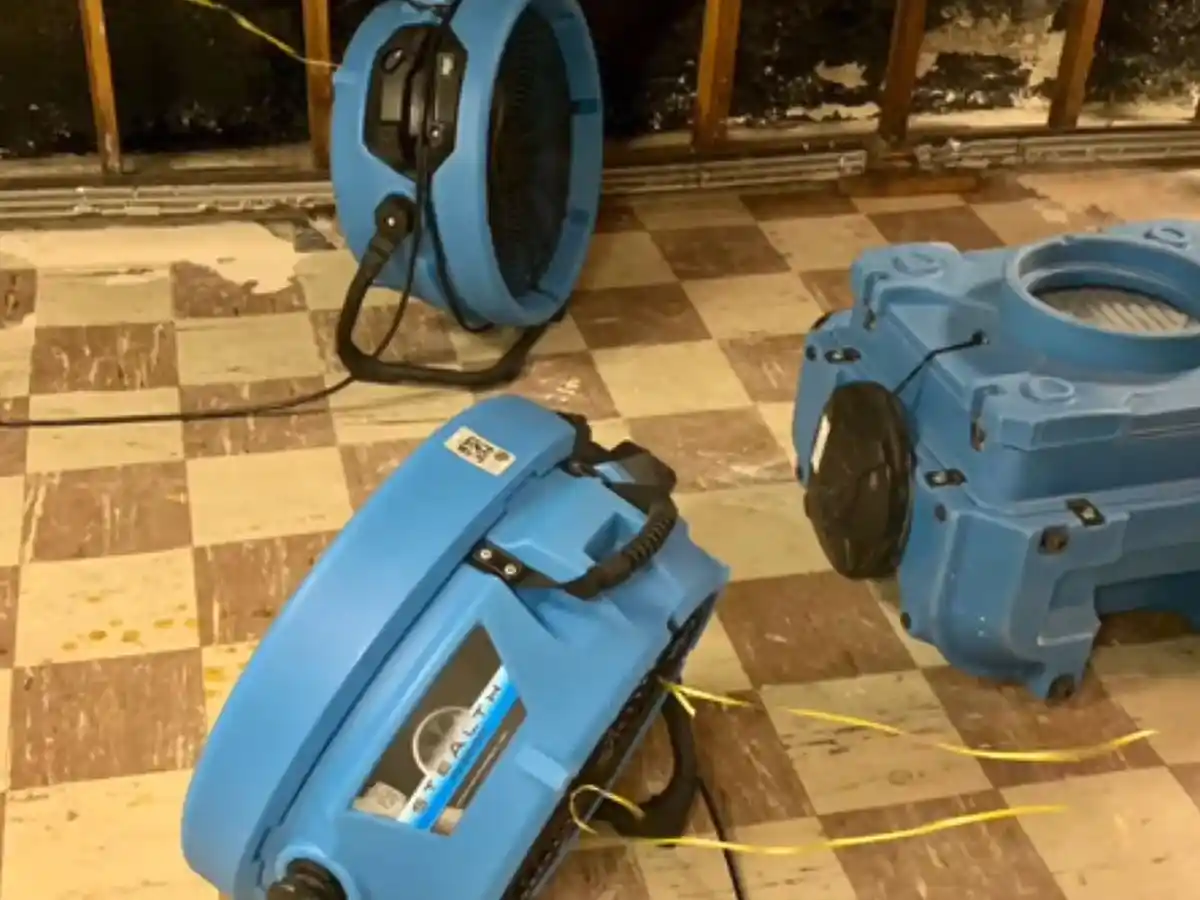
Industrial air movers and dehumidifiers positioned for the space.
Daily moisture checks until levels return to normal.
Final readings confirm the structure is fully dry.
 Cost Ranges
Typical 2 to 3 day drying cycle.
Larger area or older-home construction holding moisture longer.
Drying time and cost scale with how much of the structure was affected and how long moisture was present before treatment.
Related ServicesThe extraction step that typically precedes structural drying.
If moisture wasn't addressed in time and mold has started.
Typically 2 to 5 days depending on the extent of moisture intrusion and the building's construction, with daily monitoring to confirm progress.
For a small, contained spill maybe, but once water has reached subfloor or wall cavities, standard fans usually can't remove enough moisture to prevent mold, especially in this climate's ambient humidity.
Yes, hardwood dries more slowly and carefully than tile or vinyl to avoid permanent cupping or warping, and we adjust equipment placement accordingly.
Yes, for any job running more than a single day we track and provide daily moisture readings as standard practice.
Yes, masonry common in some Sponge Docks-area commercial buildings holds moisture differently than typical residential framing, and we adjust for it.
Yes, we provide straightforward daily updates during the drying process rather than leaving equipment unattended for days.
Yes, we check that doors and windows are closed so dehumidifiers can actually reduce ambient humidity in the space.