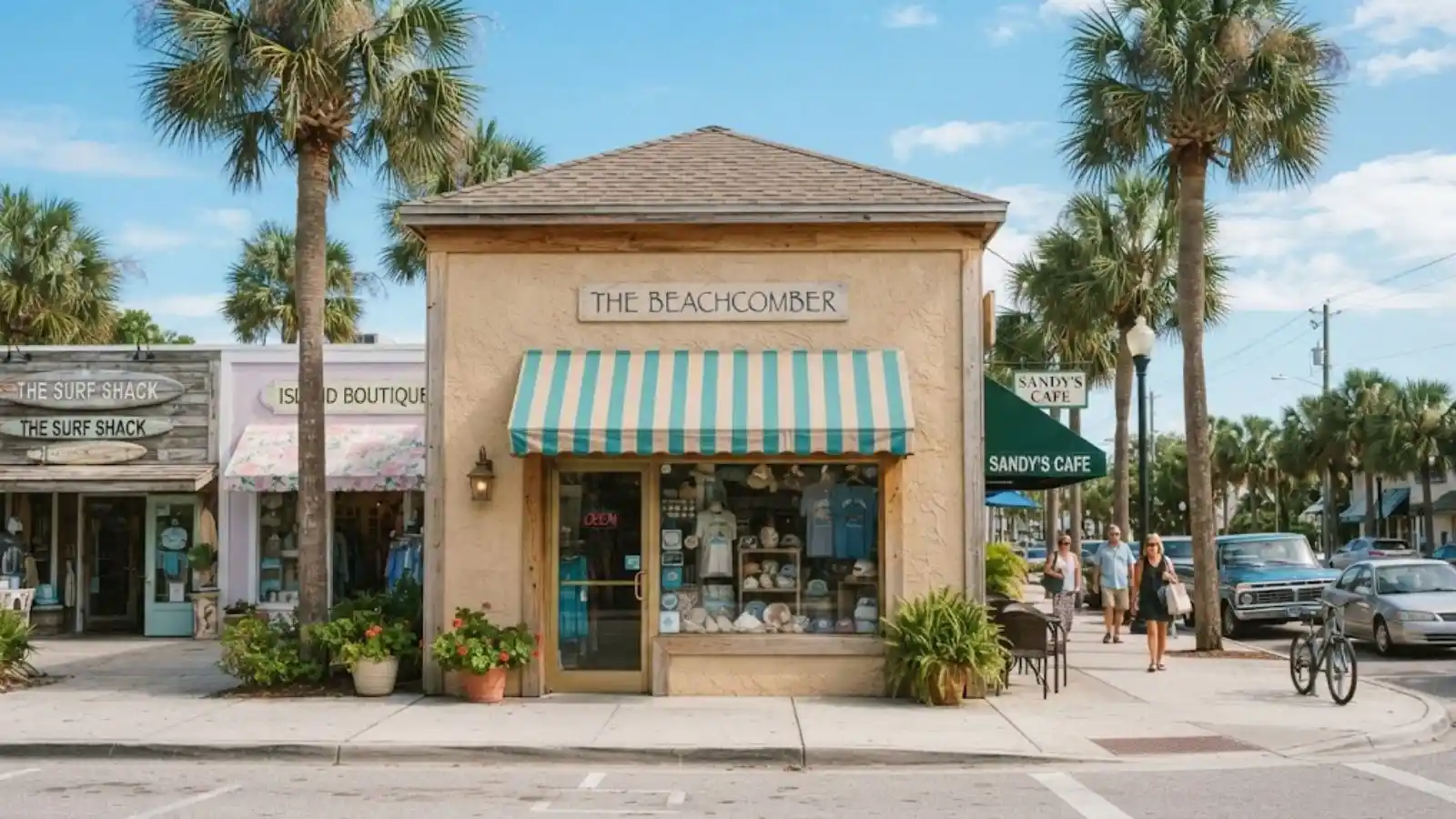
The Sponge Docks along Dodecanese Boulevard and the Anclote River are the commercial and cultural heart of Tarpon Springs, drawing visitors specifically for the historic Greektown atmosphere, sponge-diving heritage, and waterfront dining and retail. That tourism dependence is exactly what makes water damage recovery timing so much more consequential here than for a typical commercial property elsewhere in the city.
For a retail shop or restaurant along the Sponge Docks, every day closed during peak tourist season represents lost revenue on top of the physical repair cost. A dynamic that's less pronounced for, say, an office building where closure mainly means an inconvenience rather than a direct hit to daily income. This is why commercial water damage response here needs to weigh business-continuity urgency alongside standard restoration thoroughness, not treat them as separate priorities.
A number of buildings along this stretch combine ground-floor retail or dining with older masonry or mixed construction, which holds and releases moisture differently than modern commercial buildings. That means structural drying timelines can run longer than a business owner might expect based on comparisons to newer construction elsewhere, worth factoring into any reopening timeline conversation.
Hurricane season overlaps significantly with peak tourism months in Florida, which means a storm-related closure along the Sponge Docks often hits at exactly the time of year when lost business matters most. Hurricane Helene and Hurricane Milton in 2024 illustrated this directly, with real flooding reaching Main Street in the broader historic district during a period when the tourism economy was still very much active.
For commercial water damage along the Sponge Docks, we prioritize an assessment that gives a realistic reopening estimate early, rather than an open-ended timeline, and we sequence extraction and drying work to minimize disruption wherever the damage's location and extent allow it. Our Commercial Water Damage Restoration service is built around that business-continuity approach specifically, rather than applying a standard residential timeline to a commercial job.
Commercial water damage claims typically need more thorough documentation than residential ones, often including a business-interruption component tied to how long the space was actually unusable. We track timeline and occupancy impact alongside the physical damage specifically so that part of a commercial claim isn't left undocumented — a detail that matters more for a tourism-dependent business than it might for a standard office.
For Sponge Docks business owners, understanding your specific flood zone, having a documented baseline of your building's condition, and knowing in advance who to call for both extraction and insurance-savvy documentation can shave real time off a future recovery, compared to figuring all of that out for the first time in the middle of an active water event during your busiest season.
Florida's hurricane season runs from June through November, overlapping almost entirely with the region's busiest tourist months. For a Sponge Docks business, this means storm preparedness isn't a once-a-year formality. It's an ongoing operational consideration for roughly half the calendar year. Having a written emergency plan that covers water damage response specifically, not just general storm evacuation, is worth developing well before hurricane season starts rather than improvising one during an active storm warning.
That plan should include knowing in advance who to call for emergency water extraction and structural drying, having key documentation. Insurance policy details, past inspection reports, photos establishing your building's pre-storm condition. Accessible even if you can't physically get to the property immediately after a storm, and understanding your specific flood zone and any substantial-damage compliance history tied to your commercial address.
Businesses that already have a relationship with a restoration company before a storm hits tend to move through the recovery process faster than those starting from scratch during an emergency. There's no time lost identifying a provider, and existing documentation of your building's baseline condition makes assessing storm damage more straightforward.
For Sponge Docks business owners who haven't yet established that kind of relationship, doing so before the next hurricane season, rather than during one, is a genuinely useful piece of business continuity planning.
Many Sponge Docks properties involve more than a single decision-maker — a business owner leasing from a separate property owner, or a building with several ground-floor tenants sharing common structural elements.
Water damage recovery in these situations often requires coordinating communication and consent across more than one party before work can begin in earnest, which is worth planning for in advance rather than discovering mid-emergency. Knowing who holds decision-making authority for repairs, insurance claims, and access to shared spaces before a storm hits saves real time when a fast response actually matters.
This is also where having a single point of contact for the restoration side helps — rather than each tenant or stakeholder independently calling around during an active event, one coordinated call that we can then loop in the relevant parties on tends to move faster and avoid duplicated or conflicting instructions from different people about the same shared space.
For any business operating along this stretch of coastline long-term, storm resilience is worth treating as an ongoing part of business planning rather than a once-a-year seasonal concern. That might mean budgeting for periodic building assessments, keeping insurance documentation current year-round, or simply making sure staff know the emergency response plan before they need it during an actual event rather than learning it for the first time under pressure.
Common QuestionsIn many cases yes — we schedule extraction and drying equipment placement around operating hours wherever the damage allows for it, particularly important for tourism-dependent businesses.
Often yes — masonry and older mixed construction hold moisture differently than modern buildings, which can extend structural drying timelines compared to newer construction.
Yes, we track timeline and occupancy impact alongside physical damage documentation to support that component of a commercial claim.
Call for a fast, documented assessment.
Call now for emergency water, fire, or mold response in Tarpon Springs.
☎ Call (727) 591-9483