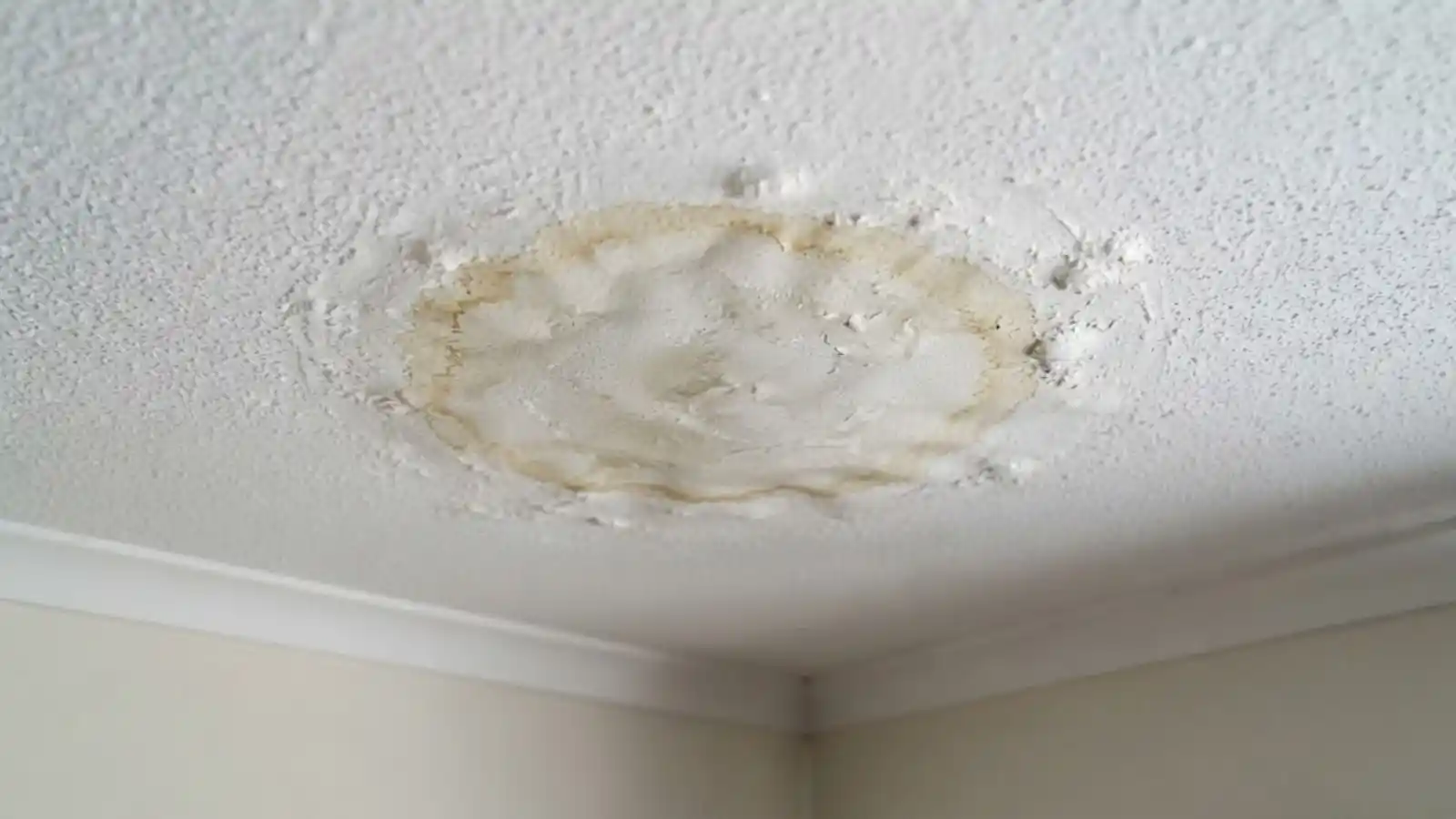
It's one of the most common urgent calls we get: someone notices a ceiling that feels soft when touched, or sees the beginning of a small sag or hole forming, usually somewhere below a bathroom or a room with plumbing above it. It's worth understanding exactly what that soft spot means, because by the time it's noticeable, the situation is usually further along than it looks.
Drywall and plaster don't sag or soften from a brief, minor amount of moisture — it takes sustained water exposure, usually from a slow, ongoing leak rather than a one-time event, to actually weaken the material structurally. That means if you're seeing a soft spot, water has likely been present in the ceiling cavity for some time already, often longer than the visible staining alone would suggest.
The most common source is a leak from directly above — a failing wax ring under a toilet, a slow drip from a supply line inside a bathroom vanity, or grout and caulking that's let shower water intrude behind tile and travel down into the ceiling cavity below. Because these leaks are often slow rather than sudden, they can go unnoticed for weeks before enough water accumulates to visibly affect the ceiling.
There are two separate risks once you see a soft spot: structural failure, meaning the ceiling material itself can eventually give way, and mold, since water sitting in a dark, enclosed cavity for an extended period is close to ideal conditions for growth, especially in a climate like Tarpon Springs' where mold can establish within 24 to 48 hours of sustained moisture.
By the time a soft spot is visible, there's a real chance mold has already started on the unseen side of the material, which is why a full assessment rather than just a cosmetic patch matters.
Handling this correctly means identifying and stopping the water source first, since otherwise any repair simply gets wet again, then drying the cavity fully, checking for mold before closing anything back up, and only then repairing the ceiling material itself.
Skipping the drying and mold-check steps in favor of a quick patch is one of the most common reasons a "fixed" ceiling ends up with a return problem months later. Our Ceiling Water Damage Repair service is built around that full sequence rather than a cosmetic-only fix.
In Tarpon Springs' historic district, where original plaster-and-lath ceilings are still common rather than modern drywall, this process looks a little different — plaster holds and releases water differently than drywall, and can appear stable right up until it isn't. If you own one of these older properties, mentioning the ceiling's original construction when you call is genuinely useful information for how we approach the assessment.
A soft spot that's ignored generally doesn't resolve on its own — it either continues to weaken until it fails, or the underlying leak continues feeding mold growth that spreads further into the cavity and potentially into adjacent framing. Catching it at the soft-spot stage, before a full hole forms or the ceiling actually collapses, is meaningfully less expensive and less disruptive than waiting.
Left unaddressed, a soft ceiling spot generally follows one of two paths, both bad. Either the underlying leak continues, the affected area expands, and eventually the weakened material actually fails.
Sometimes suddenly, sometimes with enough warning to see it coming if you're paying attention — or the moisture creates conditions for mold to spread further into the cavity and potentially into adjacent framing and insulation, turning what could have been a contained repair into a much larger remediation project. Neither outcome resolves on its own, and both get more expensive and more disruptive the longer they're left.
There's also a real safety dimension worth taking seriously: a ceiling that's weakened enough to sag or soften has a genuine risk of partial or full collapse, particularly if additional weight is added — someone walking on the floor above, additional water accumulating from continued leaking, or simply the material finally reaching its structural limit.
This isn't meant to cause alarm over every minor stain, but a soft spot specifically, as opposed to just discoloration, represents a meaningfully different and more urgent category of damage.
For a contained, isolated soft spot with an already-stopped leak, the full process — drying the cavity, confirming no mold, and repairing the ceiling material — typically runs a few days from initial assessment to finished repair, though drying time can extend that timeline in more humid conditions or with more extensive water intrusion.
If the leak is still active when we arrive, addressing that source first is the priority, which can add time depending on whether it's a straightforward fixture issue or something requiring more involved plumbing work.
If you're debating whether a soft spot is worth a professional call or something you can keep an eye on for a while longer, the presence of the soft spot itself is generally the answer. Staining alone might reasonably wait a day or two while you investigate on your own, but softness means the material has already been compromised structurally, and that's not a condition that improves with more time.
If you're a landlord or property manager and a tenant reports this kind of issue, treating the report with urgency rather than waiting to see if it resolves protects both the tenant and the property itself.
Common QuestionsUsually, yes, most often from a bathroom, but occasionally water can travel laterally along framing before showing up, so the source isn't always directly overhead.
That risks the same area getting wet again and doesn't address any mold that may already be present in the cavity. The source needs to be identified and stopped first.
Treat it as genuinely time-sensitive — the combination of structural weakening and mold risk both increase the longer a soft spot goes unaddressed.
Call for a fast, documented assessment.
Call now for emergency water, fire, or mold response in Tarpon Springs.
☎ Call (727) 591-9483