If you split your year between Tarpon Springs and somewhere further north, you already know the drill for closing up the house before you leave. But water damage and mold are two of the most common issues seasonal homeowners return to find, precisely because both can develop quietly over weeks or months without anyone there to notice early warning signs.
This is the single most common mistake. A warm, sealed, humid house is close to ideal conditions for mold, and turning the AC off entirely to save on utility costs while you're gone often costs far more in remediation than it saves in electricity.
Most guidance for this climate recommends setting the thermostat somewhere around 78 to 82 degrees rather than turning the system off, keeping the fan on "auto," and using a smart thermostat if you have one so you can monitor and adjust remotely.
For an extended absence, consider whether to shut off your main water supply entirely, or at minimum isolate vulnerable fixtures and appliances — washing machine supply lines, ice makers, and water heaters are common sources of a slow failure that goes unnoticed for months in a vacant home.
If you don't shut off the main supply, at least know exactly where it is, and make sure whoever checks on your property during your absence knows too.
A neighbor, a friend, or a paid home-watch service checking in periodically is genuinely one of the highest-value things you can arrange. Ask whoever checks to specifically look at ceilings, baseboards, under sinks, around the water heater, and near exterior doors and windows, not just do a quick walkthrough.
If a leak starts the week you leave, the difference between it being caught in week one versus discovered when you return in the fall is the difference between a quick fix and a full remediation project.
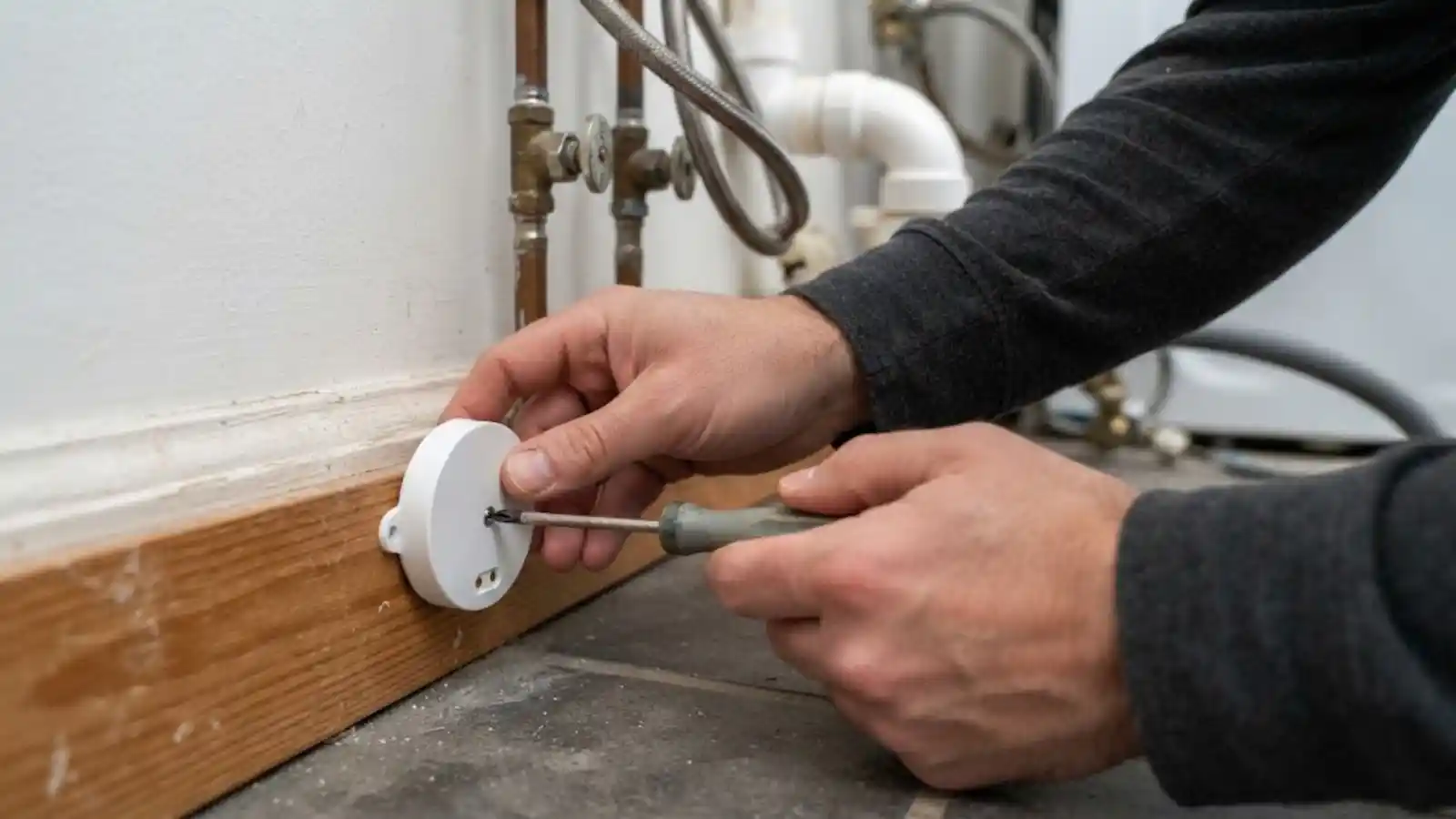
Smart water leak sensors placed near toilets, washing machines, water heaters, and under sinks can send an alert to your phone the moment they detect moisture, regardless of where you are. Combined with a smart shutoff valve, this setup can sometimes stop a leak's water supply automatically before anyone physically checks the property. A meaningful upgrade over relying entirely on a periodic in-person check.
Before settling back in, walk the property with the same checklist in mind: ceilings, baseboards, window edges, under sinks, and around the water heater and AC equipment.
A musty smell, any staining, or visible dampness is worth investigating immediately rather than assuming it will air out — remember that mold can establish itself in this climate within days, not weeks, so several months of vacancy is more than enough time for a small, unnoticed leak to become a real mold problem.
If your return-home inspection turns up something concerning, a proper Mold Inspection can identify the extent and source before you decide how to proceed, and if there's active water damage found, our Water Removal service can get ahead of it before mold has time to establish further. This applies just as much to seasonal properties in Dunedin and nearby communities as it does in Tarpon Springs itself.
Beyond the AC and water shutoff considerations already covered, a few additional steps make a meaningful difference before an extended absence. Clean gutters and check downspout discharge points so heavy rain doesn't pool against your foundation while you're gone.
Test any sump pump if your property has one, since a pump that fails silently during a heavy rain event while no one's home to notice is one of the more common causes of a water damage surprise upon return. Check window and door seals for any gaps that could let wind-driven rain in during a storm, since even a small gap can let in enough water over weeks or months to cause real damage.
It's also worth doing a final walkthrough specifically looking at anything you might normally check casually during regular daily life but would otherwise go unnoticed for months — under every sink, behind the washing machine, around the water heater, and in any closet or storage area with limited airflow. A five-minute check before you lock up is a small investment against months of unnoticed risk.
If you're relying on a neighbor, friend, or paid home-watch service, give them more than just a key — give them a specific checklist and clear instructions on what to do if they find something concerning.
Make sure they know where your main water shutoff is located, have a way to reach you or a local contact quickly, and understand that a musty smell or any dampness is worth flagging immediately rather than waiting until their next scheduled visit. The value of a property check depends entirely on the person doing it knowing what to actually look for and how urgently to act if they find it.
The more consistently you follow a pre-departure checklist each season, the less likely you are to skip a step that ends up mattering. Consider keeping a written copy of your specific checklist, whether it's a printed list by the door or a note on your phone, so the process becomes routine rather than something you try to reconstruct from memory each time you head north.
Common QuestionsMost guidance for this climate suggests around 78 to 82 degrees rather than turning the system off entirely, to keep indoor humidity from climbing to mold-favorable levels.
For an extended absence, it's a reasonable precaution, especially if no one will be checking the property regularly. At minimum, isolate high-risk fixtures like washing machine lines and ice makers.
Regular, ideally weekly or biweekly checks are far more effective than monthly ones, since a leak or AC failure can develop into real damage within just a few days in this climate.
Call for a fast, documented assessment.
Call now for emergency water, fire, or mold response in Tarpon Springs.
☎ Call (727) 591-9483