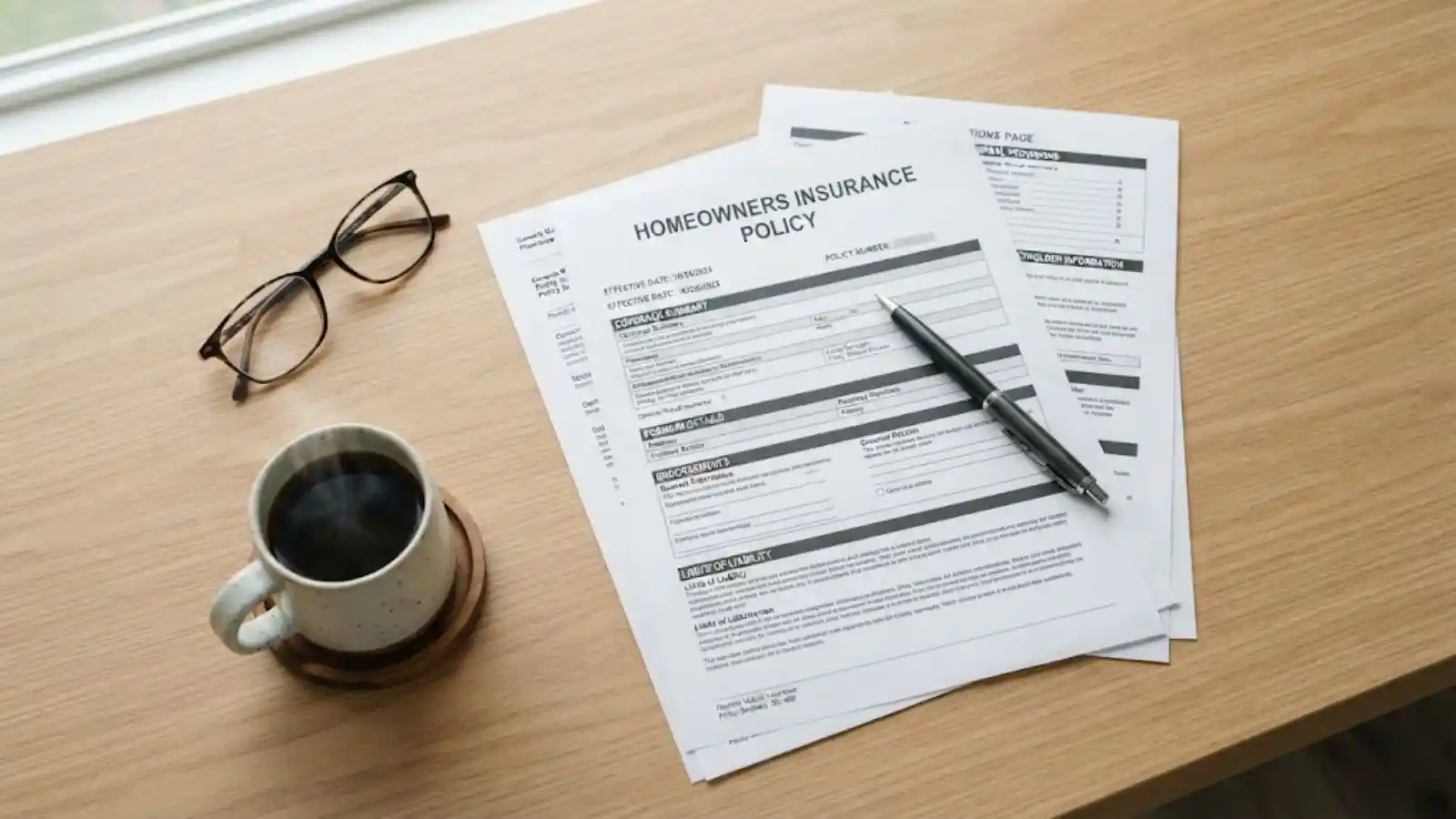
Standard Florida homeowners policies generally cover water damage that's "sudden and accidental" — but most also include a provision excluding damage that occurred gradually over a period exceeding roughly 14 days. This provision has become a genuine source of denied or reduced claims, and understanding how it works can change how quickly you respond to a leak you're not entirely sure about.
Non-flood water damage claims in Florida have risen substantially over the past decade and a half, and the industry's response has included tightening what qualifies as covered, sudden damage versus excluded, gradual damage. A slow leak behind a wall or under a slow-dripping fixture that goes unnoticed for weeks is exactly the scenario this provision is designed to exclude from coverage.
The 14-day language sounds clean in theory but gets messy in practice. Many homeowners genuinely don't know when a slow leak actually started, if you're out of town for two weeks, or if a leak is happening somewhere you rarely check, like behind a rarely-used closet or inside a vanity cabinet, there's often no way to know precisely when day one occurred.
A 2018 appeals court decision has supported the position that damage occurring during the covered portion of a leak's timeline, before day 14, should still be covered even if the leak continued longer, but this remains a point of real dispute between homeowners and insurers in practice.
Given this provision, the practical lesson is straightforward: the moment you notice any sign of a slow leak — a musty smell, discoloration, a slightly soft spot, unusually high water usage on a utility bill — treating it as worth investigating immediately, rather than watching it for a while to see if it's really a problem, protects both your home and your insurance position.
Waiting to "see if it gets worse" is exactly the kind of delay that can push a leak past the 14-day threshold and into excluded territory.
If you do discover a leak and you're not certain how long it's been present, a professional assessment that documents current conditions — moisture readings, visible extent of damage, an informed opinion on likely duration based on the pattern of damage.
Gives you a stronger basis for a claim than your own account alone. Our Water Mitigation service includes this kind of documentation as standard practice specifically because of how often duration becomes a point of dispute.
Given how quickly mold can establish in Tarpon Springs' humidity, often within 24 to 48 hours of sustained moisture, a slow leak that runs anywhere near the 14-day exclusion threshold has likely already created a meaningful mold problem on top of the structural water damage, compounding both the health-related and financial stakes of catching a leak early rather than late.
You can't always control how quickly you notice a leak, but you can control how quickly you act once you do notice something. In a state where a gradual-damage exclusion is a real, enforceable part of most standard policies, treating any hint of ongoing moisture as urgent rather than something to monitor is the most effective thing a homeowner can do to stay on the right side of that 14-day line.
When a claim involves a question of how long water damage has been occurring, insurers typically send an adjuster or engage a forensic assessment to examine physical evidence — the extent and pattern of material degradation, moisture readings at various depths within affected materials, and sometimes mold growth stage, all of which can suggest a rough timeline even without a homeowner's own account.
This is exactly why an independent, professional assessment at the time damage is discovered matters: it creates a contemporaneous record that can support your account of a shorter timeline, rather than leaving the insurer's own investigation as the only technical evidence in the file.
If you disagree with an insurer's determination that damage occurred over more than 14 days, you're not without recourse — you can engage your own independent assessment, and ultimately dispute the determination through your policy's appraisal process or, if necessary, through legal channels.
But all of this is considerably easier to navigate with your own documentation in hand from the time the leak was discovered, rather than relying solely on the insurer's after-the-fact assessment of a leak whose actual start date nobody can pinpoint with certainty.
One of the more counterintuitive lessons from the 14-day exclusion is that small, seemingly minor leaks deserve the same prompt attention as dramatic ones.
A steady but slow drip under a sink might seem like a low priority compared to an obviously flooding room, but if it's left unaddressed for weeks, it carries the same gradual-damage exclusion risk as any other slow leak, and given this climate's mold timeline, it may actually create a worse mold outcome relative to its water volume than a larger, faster event that gets noticed and addressed immediately.
The most reliable way to protect yourself against this exclusion isn't a one-time action but an ongoing habit: periodically checking under sinks, around water heaters, and near major appliances for any sign of moisture, even when nothing seems obviously wrong. A five-minute check every month or two costs you almost nothing and meaningfully reduces the odds of a slow leak going unnoticed long enough to become a coverage problem.
Common QuestionsNot entirely — case law has supported coverage for damage that occurred during the covered portion of the leak's timeline, but this remains an area of real dispute in practice, so documentation matters.
A professional moisture assessment can offer an informed estimate based on the pattern and extent of damage, which is generally more persuasive to an insurer than a homeowner's own estimate.
No, a sudden, accidental failure like a burst pipe is generally treated differently from a slow, gradual leak under most standard policies.
Call for a fast, documented assessment.
Call now for emergency water, fire, or mold response in Tarpon Springs.
☎ Call (727) 591-9483