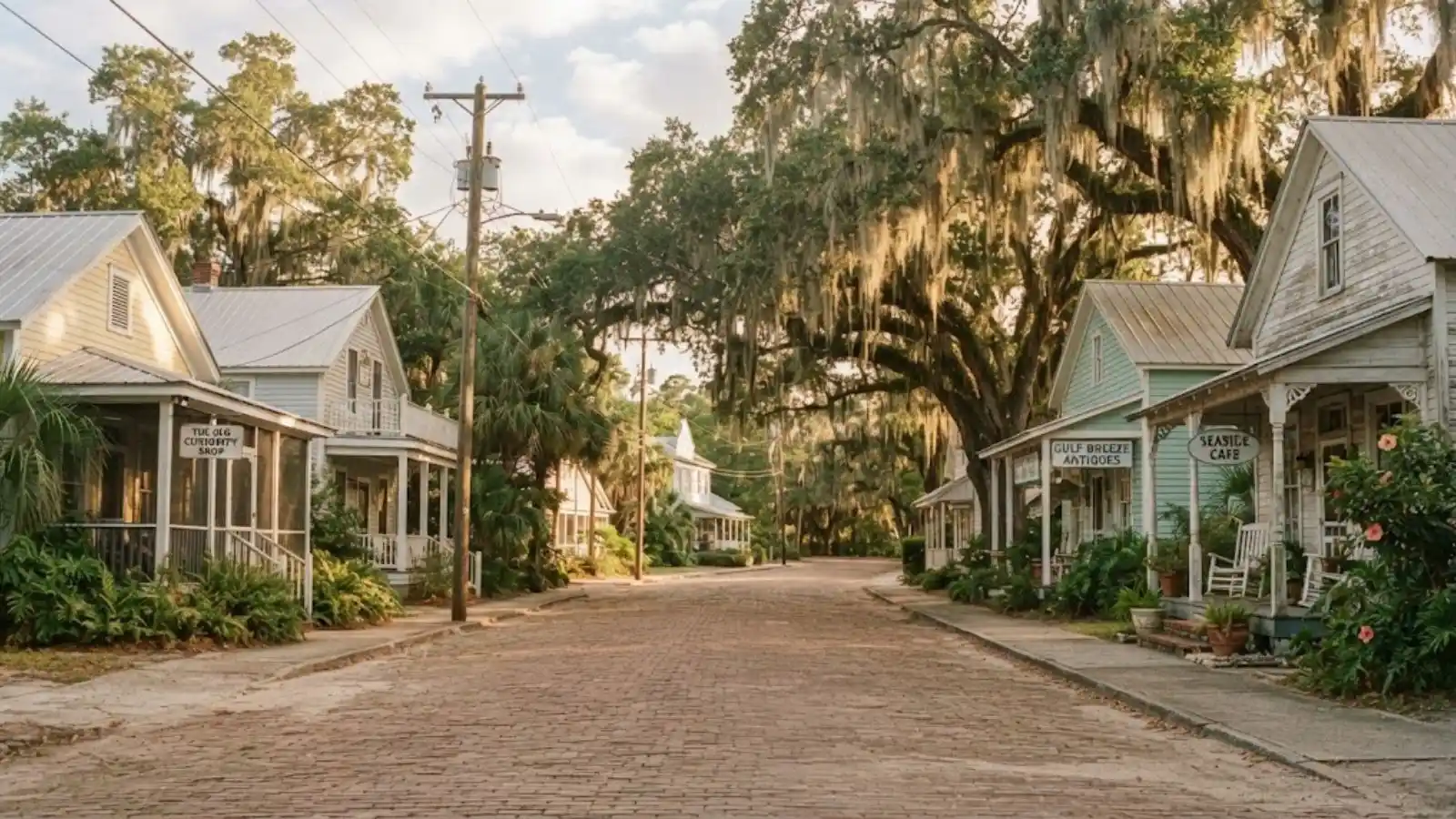
When Hurricane Milton made landfall near Tarpon Springs in October 2024, local and regional coverage repeatedly reached back more than a century for comparison — to the 1921 Tarpon Springs Hurricane, a Category 3 storm that remains the historical benchmark for what a direct, severe hit to this stretch of the Gulf Coast actually looks like.
The 1921 hurricane made landfall as a Category 3 storm with an estimated 11-foot storm surge — a genuinely severe surge event for a coastline that, even today, sits at a relatively low average elevation.
Tarpon Springs in 1921 was a much smaller, though already established, Gulf Coast community, having been incorporated just 34 years earlier in 1887 and settled originally in 1876. The scale of that storm relative to the town's size at the time made it a defining event in the region's collective memory, one that's been referenced in Gulf Coast hurricane history ever since.
Storm surge benchmarks matter because they represent a worst-case scenario against which more recent storms get measured.
When coverage of Hurricane Milton referenced the 1921 storm, it wasn't simply historical trivia — it was a way of contextualizing how severe modern surge events could still get, given that Tarpon Springs' underlying geography (bordered by the Anclote River, the Gulf, and Lake Tarpon, with roughly half the city's area being water) hasn't fundamentally changed in the intervening century.
The most significant difference between 1921 and now isn't the storm risk itself. It's what's built in the storm's path. A far larger population, denser residential development, and a historic district with more than 140 designated buildings along and near Tarpon Avenue all mean that a storm surge event of similar magnitude today would affect vastly more property than it did a century ago.
Modern building codes, flood-elevation requirements, and programs like Elevate Florida exist specifically because of that gap between historical worst-case events and today's development footprint.
One development the 1921 storm predates entirely is Lake Tarpon's modern water-management infrastructure. Ahead of Hurricane Milton in 2024, the Southwest Florida Water Management District actively drew down Lake Tarpon specifically to prevent catastrophic surge and outfall-canal flooding around the lakefront neighborhoods. A tool that simply didn't exist in any comparable form a century ago, and one that meaningfully changed how the city was able to prepare for Milton's approach.
The 1921 storm is a reminder that severe storm-surge events aren't unprecedented for this specific stretch of coastline. They're a known, if infrequent, part of Tarpon Springs' history, and Helene and Milton in 2024 weren't an anomaly so much as a modern instance of a risk this area has always carried.
For homeowners, especially those in older properties along Palm Harbor and other Gulf-facing communities, understanding that historical context is part of understanding why responding fast to hurricane damage and staying prepared aren't seasonal concerns so much as an ongoing feature of living along this coastline.
Events like the 1921 hurricane are part of why modern floodplain management and building codes exist in their current form — they represent documented, real-world worst cases that inform how engineers and regulators set standards like Design Flood Elevation requirements.
When the City of Tarpon Springs requires substantially damaged structures in AE flood zones to elevate to or above the Design Flood Elevation, that standard reflects, in part, a century of accumulated knowledge about how severe this coastline's storm-surge risk can actually get, with the 1921 storm serving as one of the more extreme documented data points in that historical record.
This connects directly to why compliance with current elevation and construction standards matters beyond simply satisfying a permit requirement. It's a practical response to a documented, recurring risk pattern for this specific stretch of coastline, not an arbitrary bureaucratic hurdle. Understanding the 1921 storm's scale helps explain why the stakes of getting flood-elevation compliance right are higher here than they might be for a Gulf Coast community without comparable historical surge events.
Beyond the specific surge height, historical accounts of the 1921 storm and its aftermath in this region generally describe widespread structural damage consistent with what a Category 3 storm would produce against the building standards of that era — standards that offered essentially none of the wind-resistance or flood-elevation protections built into modern code.
That gap between then and now is exactly why homes built to current standards, or brought into compliance through processes like substantial-damage elevation requirements, are meaningfully better positioned against a storm of similar severity today than the original 1920s-era construction would have been.
None of this is meant to suggest history simply repeats itself in a predictable way. Storm behavior, construction standards, and regional infrastructure have all changed enormously since 1921.
But the underlying geography that made this stretch of coastline vulnerable a century ago hasn't gone anywhere, and that continuity is exactly why local storm history remains a useful reference point rather than a historical footnote, worth understanding by anyone deciding how seriously to take storm preparedness for a Tarpon Springs property today, whether that property sits directly on the water or several blocks inland.
Local historical societies and libraries often keep additional records and photographs from this era for anyone interested in a deeper look at how the city responded to and recovered from that storm.
Common QuestionsIn terms of storm surge height for the era, the 1921 storm's 11-foot surge was a severe event; direct storm-to-storm comparisons are complicated by differences in measurement, development, and modern infrastructure like the Lake Tarpon drawdown.
It serves as the historical benchmark for severe storm surge risk specific to this stretch of coastline, giving context for how bad a direct hit can get here.
The underlying geography hasn't changed much, but development density, building codes, and infrastructure like Lake Tarpon's water management have all changed significantly.
Call for a fast, documented assessment.
Call now for emergency water, fire, or mold response in Tarpon Springs.
☎ Call (727) 591-9483