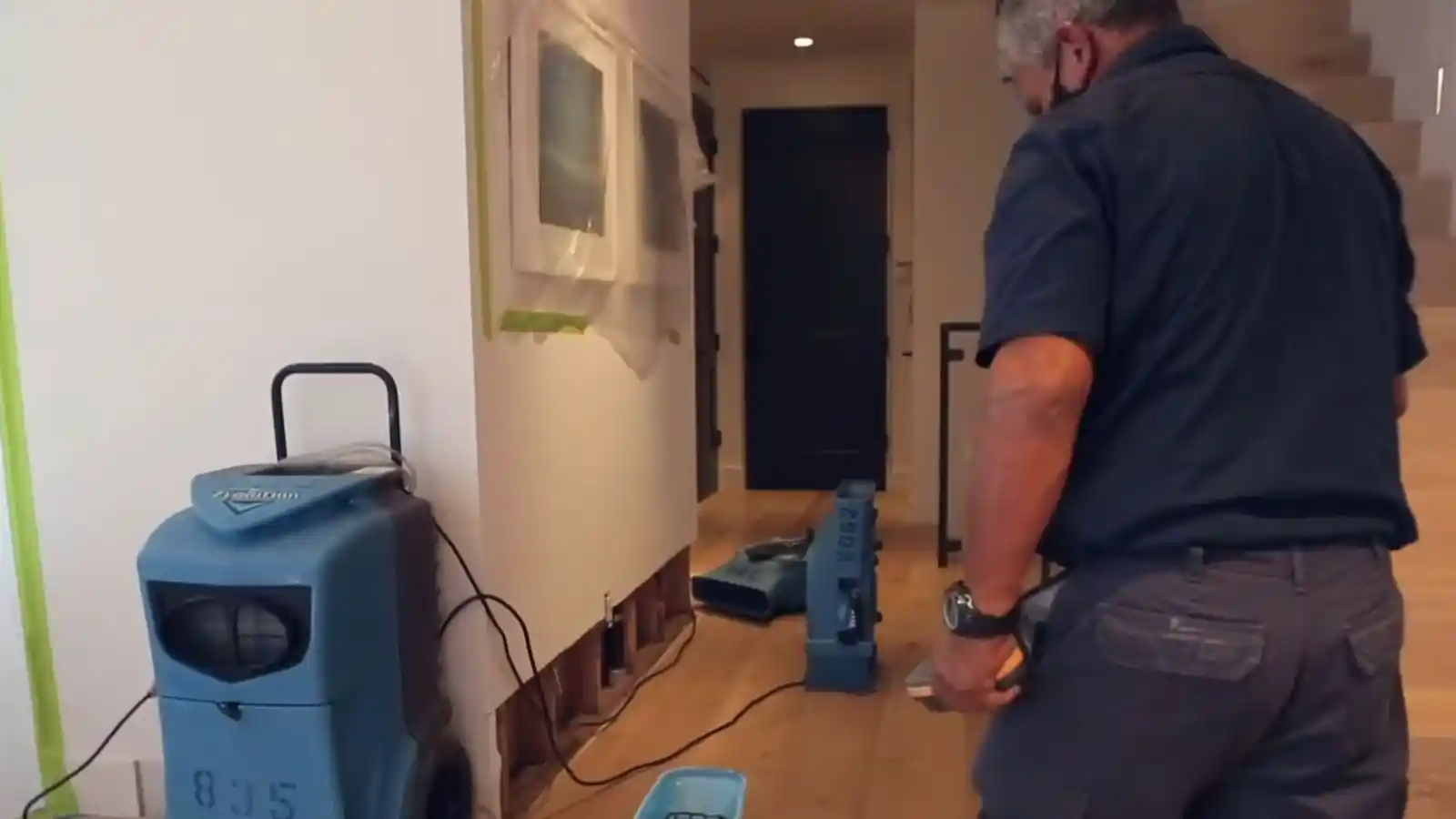
Serving Tarpon Springs and surrounding Pinellas County, 24/7 dispatch with a documented, written assessment before any work begins.
Given the region's high water table and proximity to Lake Tarpon and the Anclote River, any below-grade or partially below-grade space in Tarpon Springs is more exposed to hydrostatic pressure pushing groundwater in through walls and floor joints than a typical inland Florida property. That pressure doesn't stop just because visible rain has stopped, which is why water can keep seeping in for a day or two after a storm passes.
Extraction in these spaces has to account for that ongoing seepage, not just the water already on the floor. Otherwise the space looks dry for a few days and then shows water again. We monitor moisture readings over several days on jobs where groundwater is the likely source.
Older Tarpon Springs properties near the bayou sometimes have additions or converted spaces built at different points over the years, each with its own foundation and drainage characteristics. We treat each affected area on its own terms rather than assuming the whole structure behaves the same way underground.
Groundwater intrusion claims are handled differently than surface-water claims by most insurance policies, and carriers often ask specifically whether flooding rose from below versus came in from above. We note which pattern applies during the assessment and document accordingly, since misclassifying the source is a common reason claims get delayed.
The Fred Marquis Pinellas Trail corridor runs through several residential pockets where older homes back up to drainage easements. Properties along that corridor sometimes see groundwater pressure that's tied more to nearby drainage patterns than to the broader citywide water table, which is why we assess each property's specific surroundings.
If groundwater turns out to be a recurring issue for a specific property, we'll say so plainly rather than treating every visit as a one-time job — that kind of honest read is part of what a documented moisture history over multiple visits is actually useful for.
We also inspect any sump pump or existing drainage system already in place, since a failed or undersized pump is sometimes the actual reason water accumulated in the first place, and that's worth knowing even though pump replacement itself falls outside our scope.
We also note the season when groundwater problems get worse. Florida's wet season runs roughly June through September, and that's when the water table sits at its highest, making any below-grade or partially below-grade space more vulnerable to hydrostatic pressure.
A space that stayed dry all winter can suddenly show moisture issues once the wet season sets in, which is worth knowing if you're trying to figure out why a problem seems to have appeared out of nowhere.
Call for extraction and a moisture assessment.
Moisture appearing along foundation walls, not just the floor.
Areas that dry out and then reappear wet days later.
Paint or sealant bubbling from moisture pressure.
Tools or fixtures showing early rust from ambient moisture.
Describe the space and how the water is entering.
Check for hydrostatic pressure vs. surface intrusion.
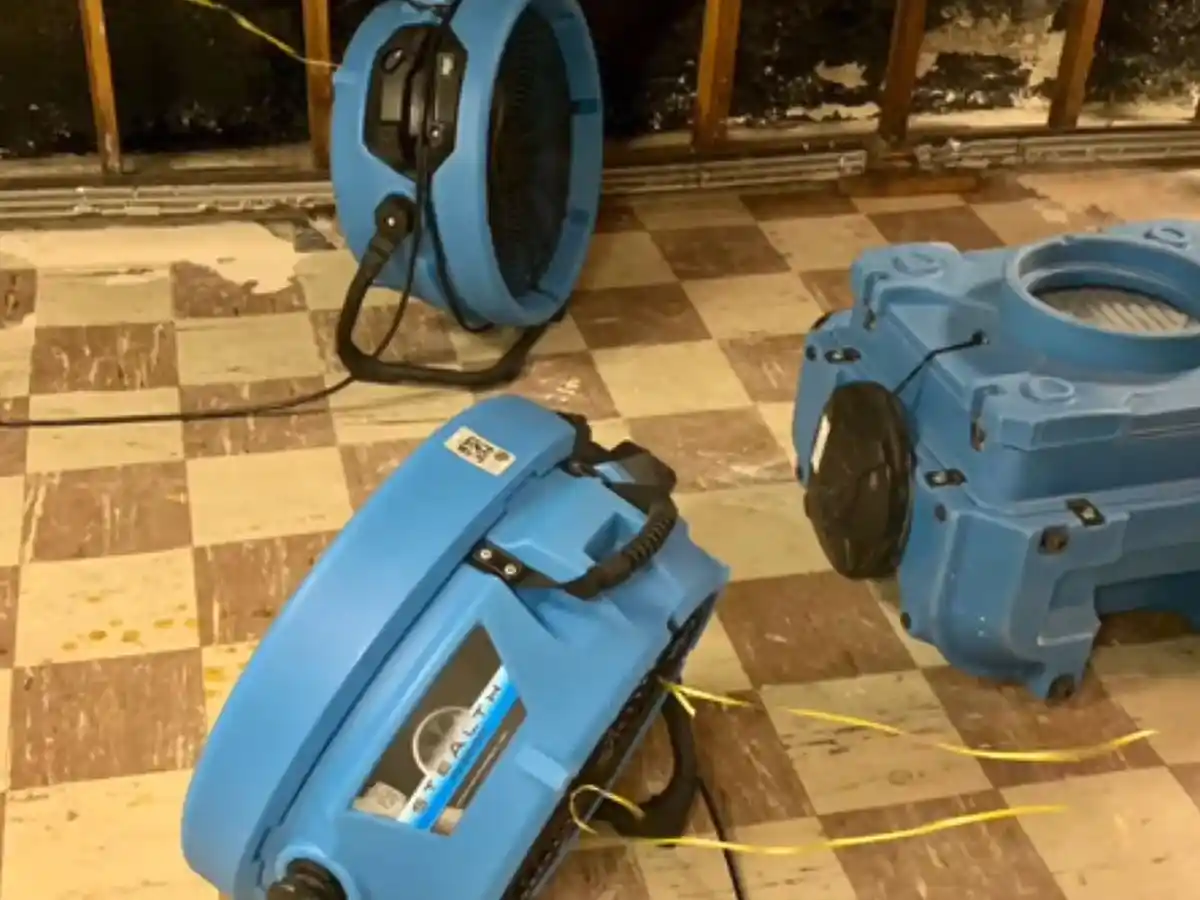
Water pumped and extracted from the affected area.
Follow-up moisture checks over several days if groundwater is suspected.
 Cost Ranges
Single event, no ongoing groundwater seepage.
Includes follow-up moisture checks for groundwater cases.
Jobs with suspected groundwater intrusion include return visits to confirm the space stays dry.
Related ServicesFull cleanup and sanitizing for flooded lower-level spaces.
Immediate steps to stop damage from spreading further.
If the source is groundwater pressure rather than surface flooding, water can keep seeping in for a day or two after rain stops. A DIY dry-out often misses this and the space re-wets.
We can flag drainage or grading issues we notice during extraction, though structural waterproofing itself is outside our scope. We can point you toward what to raise with a contractor.
Yes, if groundwater intrusion is suspected we schedule a follow-up moisture check rather than closing the job after a single dry reading.
Yes — most policies handle groundwater intrusion differently than surface-water damage, so we document which pattern applies as part of the assessment.
Yes, nearby drainage patterns and easements can matter as much as the broader water table, so we look at each property's specific surroundings.
Yes, if the pattern suggests a recurring groundwater issue, we'll say so directly rather than treating it as a one-time job.
Yes, we inspect any existing sump or drainage system, since a failed pump can be part of why water accumulated.